
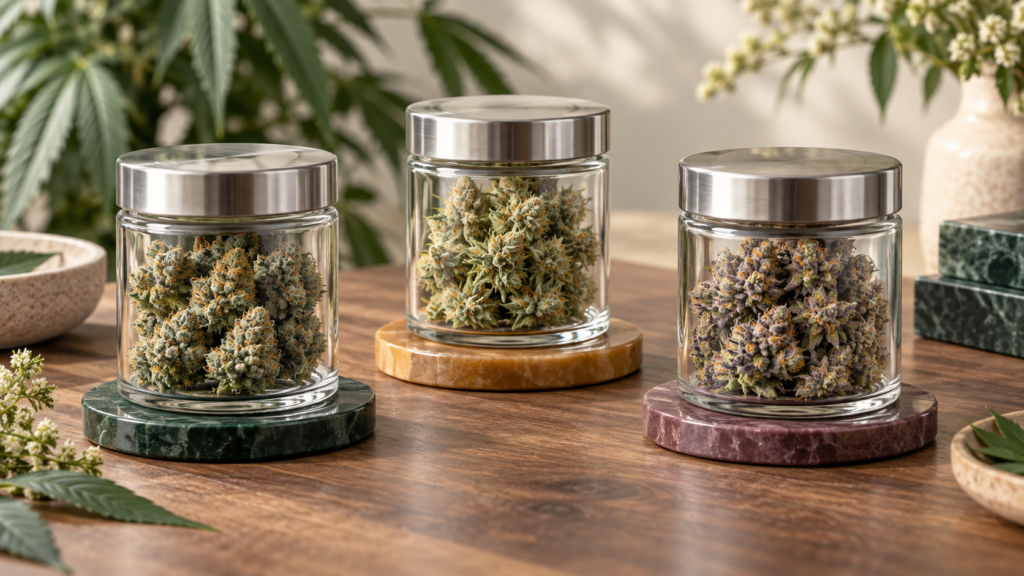
Indica vs sativa vs hybrid is a three-way system used to sort many cannabis menus. Indica is often linked with a heavier style, sativa with a brighter style, and hybrid with a mix. These labels are broad clues, not effect guarantees. Strength, dose, product form, chemistry, and personal response can matter more.
Key Takeaways
- Indica, sativa, and hybrid are broad retail labels.
- A hybrid has mixed ancestry, but the word does not show an exact effect.
- Many modern cannabis products have been crossed over time.
- THC, CBD, terpenes, serving size, and product form add useful detail.
- Adults should start with a low amount, wait, and never drive after use.
What Indica, Sativa, and Hybrid Usually Mean
The indica and sativa names have roots in plant science and cultivation history. People linked them with plants from different places and with different shapes. Modern stores often use the same words to describe a broad product style.
An indica label often points to a product expected to feel slow, calm, or heavy. A sativa label often points to one expected to feel alert, social, or bright. A hybrid label means the plant has mixed ancestry or is presented as a mix of traits.
Those meanings are common, but they are not exact. A person may not feel the expected result. Indica vs sativa vs hybrid should be used as a first filter, followed by a closer label check.
The indica vs sativa vs hybrid system is best treated as a map, not a promise.
What Does Hybrid Mean?
Hybrid is not one fixed type. It can describe any cannabis plant with a mixed family line. Since growers have crossed plants for many years, a large share of modern cannabis has some mixed ancestry.
A product may be called indica-dominant, sativa-dominant, or balanced. These words suggest which side of the family tree or product style is stronger. They do not state a set chemical ratio. They also do not promise how the product will feel.
One hybrid can have a high THC level. Another can have a lower level or more CBD. The two may have different aromas, serving formats, and timing. The hybrid label alone is not enough for a careful choice.
This variety is why indica vs sativa vs hybrid cannot rank products by strength.
What Science Says About the Three Labels
A Nature Plants study found that sativa-labeled and indica-labeled samples were not clearly different across the full genome. The labels were more closely linked with a small set of terpenes that help shape aroma.
An earlier plant genetics study found a moderate link between reported ancestry and genetic structure. It also found that cannabis strain names were not always a sound guide to genetic identity.
Research like this shows why indica vs sativa vs hybrid is not a firm scientific scale for effects. The labels can still help adults talk with staff and sort a large menu. They work best when paired with measured product facts.
A science-aware indica vs sativa vs hybrid guide keeps those limits clear.
Five Details to Check After the Category
1. Product Form
First decide whether you are comparing flower, pre-rolls, vapes, edibles, or concentrates. Each form has its own timing and serving details. Edibles may take longer to be felt. Concentrates may contain high amounts of THC.
2. THC Amount
THC can cause intoxication and impairment. A higher amount may lead to stronger effects and a higher chance of an unwanted response. Check THC per serving for an edible and the stated THC value for other products.
3. CBD and Minor Cannabinoids
CBD is not intoxicating by itself in the same way as THC. Some products combine THC and CBD. Labels may also list CBG, CBC, or CBN. Research on many minor cannabinoids is limited, so do not treat their names as medical promises.
4. Terpenes and Aroma
Terpenes are aroma compounds in cannabis and many other plants. Product information may list compounds such as myrcene, limonene, or pinene. These facts can help describe smell. They do not guarantee energy, sleep, focus, or relief.
5. Your Own Response
The National Institute on Drug Abuse says cannabis effects can vary with amount, strength, ingredients, way of use, other drugs, health factors, age, genes, and past experience. A friend’s favorite category may not be the best fit for you.
Personal response is an important part of any indica vs sativa vs hybrid choice.
A Simple Indica vs Sativa vs Hybrid Checklist
Begin with the product form you understand. Then check THC, CBD, serving size, ingredients, warnings, and testing details. Review the category and any terpene data after these measured facts.
Ask how long the product may take to be felt. Staff can explain general timing and package directions, but no one can promise your result. New or sensitive adults should use a low amount and wait before taking more.
Timing and amount make an indica vs sativa vs hybrid comparison safer and clearer.
Compare like with like. A three-way category comparison is more useful when the products share a similar form and strength. Comparing a small edible serving with a strong concentrate tells you little about the category itself.
Keep a simple record after lawful use in a private place. Note the product, amount, time, and response. This can give you better information for a future indica vs sativa vs hybrid choice.
Shopping at KAPHA Cannabis in Lenox
KAPHA Cannabis Dispensary is located at 439 Pittsfield Rd in Lenox, on the Pittsfield and Lenox border. Our current cannabis shop page lists flower, pre-rolls, vapes, edibles, concentrates, and accessories. Live stock may change.
Our team can help adults read labels and compare similar product formats. We can explain menu groups, package units, and serving details. We do not promise effects or give medical advice.
Bring your indica vs sativa vs hybrid questions and the team can point to the facts on each label.
Use the KAPHA contact page for general questions and directions. Bring a valid government-issued ID. Adult-use sales are limited to people age 21 or older.
Massachusetts Safety and Travel Rules
Cannabis use is not allowed in public places or on federal land. Private property, hotels, rentals, workplaces, and towns may have their own rules. Check before use.
Do not drive after using cannabis. It can affect reaction time, judgment, and coordination. Plan a sober ride. Do not mix cannabis with alcohol or other drugs because the mix may increase impairment.
Keep products sealed while on the road and store them in the trunk or a locked glove box. Lock cannabis away from children and pets at home. Keep the original child-resistant package and label.
Massachusetts applies the same rules across the indica vs sativa vs hybrid labels.
Frequently Asked Questions
Is hybrid stronger than indica or sativa?
No, hybrid does not mean stronger. Strength is shown by THC amount, serving size, and product details. A hybrid can be high or low in THC, just like a product with another label. Check the package and use a low amount if you are new or sensitive to THC.
For this reason, indica vs sativa vs hybrid is not a potency scale.
What does indica-dominant hybrid mean?
It usually means the product is presented as having more indica ancestry or more traits linked with the indica category. It does not state an exact effect or chemical ratio unless the label gives those facts. Review THC, CBD, terpenes, product form, and serving size before making a choice.
Which category is best for beginners?
No single category is best for every beginner. A clear label, a product form the adult understands, and a low THC amount may be more useful than the category. Ask staff to explain timing and serving details. Use only in a lawful private place and wait before taking more.
Can an out-of-state visitor buy from KAPHA?
Yes, an out-of-state visitor age 21 or older may buy adult-use cannabis with valid government-issued ID. The product must stay in Massachusetts. It cannot cross state lines by car, plane, train, boat, mail, or another method, even if cannabis is also legal at the destination.
Compare Indica vs Sativa vs Hybrid at KAPHA
Browse our current menu before visiting Lenox, then ask the KAPHA team to help you compare product form, label details, and strength. Clear facts can make the three category names easier to use.